Karaoke Venues & Music Lounges
Find the Right Room, Book It Without Calling
Karaoke venues run on rooms with different sizes, configurations, and prices — and customers have no way to see any of it without spending fifteen minutes on the phone. SKEQ puts every room on one page, with availability, capacity, and pricing visible at a glance — so customers book the right room the first time.
The Information Is There. It Just Takes a Phone Call to Find It.
Room information scattered across pages nobody connects
A group planning a karaoke night needs to know three things before they book — which rooms are available, how many people each fits, and what it costs. That information is rarely in one place. Pricing lives on one page. Room photos are on another. Availability isn't shown anywhere online at all. A customer trying to pick the right room for eight people, on a Friday evening, at a budget they've agreed on, has no way to filter or compare without calling the venue and working through it verbally with a receptionist who may or may not know the current schedule off the top of their head.
The phone call that takes fifteen minutes and still ends in uncertainty
Calling to check availability puts the customer in a passive position — waiting for someone to check a system they can't see, hoping the answer matches what they need, then repeating the process if it doesn't. By the time the right room, at the right time, at the right price has been confirmed verbally, the customer's enthusiasm has worn thin and the group decision-making that should have been easy is now exhausting. Some customers hang up and look elsewhere. The venue loses a booking it never knew it had a chance of getting.
Peak pricing exists — but nobody outside the venue knows what it is
Most karaoke venues charge differently on weekday afternoons versus Friday evenings. Some rooms carry a premium for features like a pool table or a larger screen. But without a booking system that shows pricing per slot, customers discover the rate only when they call — or worse, when they arrive. A customer who planned around one number and gets told another at the door either pays reluctantly or walks out. Neither outcome is good for the relationship or the review.
Phone bookings with no deposit — and no protection when the group cancels
A phone booking is a verbal commitment — and verbal commitments cancel without consequence. For smaller rooms the impact is manageable. For a sixteen-person VIP suite booked for a Friday night, a last-minute cancellation is a significant revenue loss with no time to rebook the slot. Most karaoke venues have no deposit mechanism in place because collecting payment over the phone is friction-heavy and collecting it online requires a booking system they don't have. The result is a room held, a slot blocked, and a cancellation absorbed at full cost.
How SKEQ Supports Karaoke Venues and Music Lounges
Every Room Its Own Calendar — Availability, Pricing, and Pictures in One Place
Each room gets its own SKEQ calendar — its own availability, its own pricing, and its own profile page where the room's features and photos are displayed alongside the booking slots. A customer browsing the VIP suite sees pictures of the room, the pool table, the screen size, and the capacity before they pick a slot. A group checking the small room sees exactly what four people are walking into. No separate photo gallery, no disconnected rate card — everything about the room lives in the same place as the booking. This closes the gap that currently forces customers to cross-reference pictures from one page against availability from another — or give up and call. When the room is bookable from the same page that describes it, the decision is made in one sitting.
Pricing That Reflects How Rooms Actually Fill
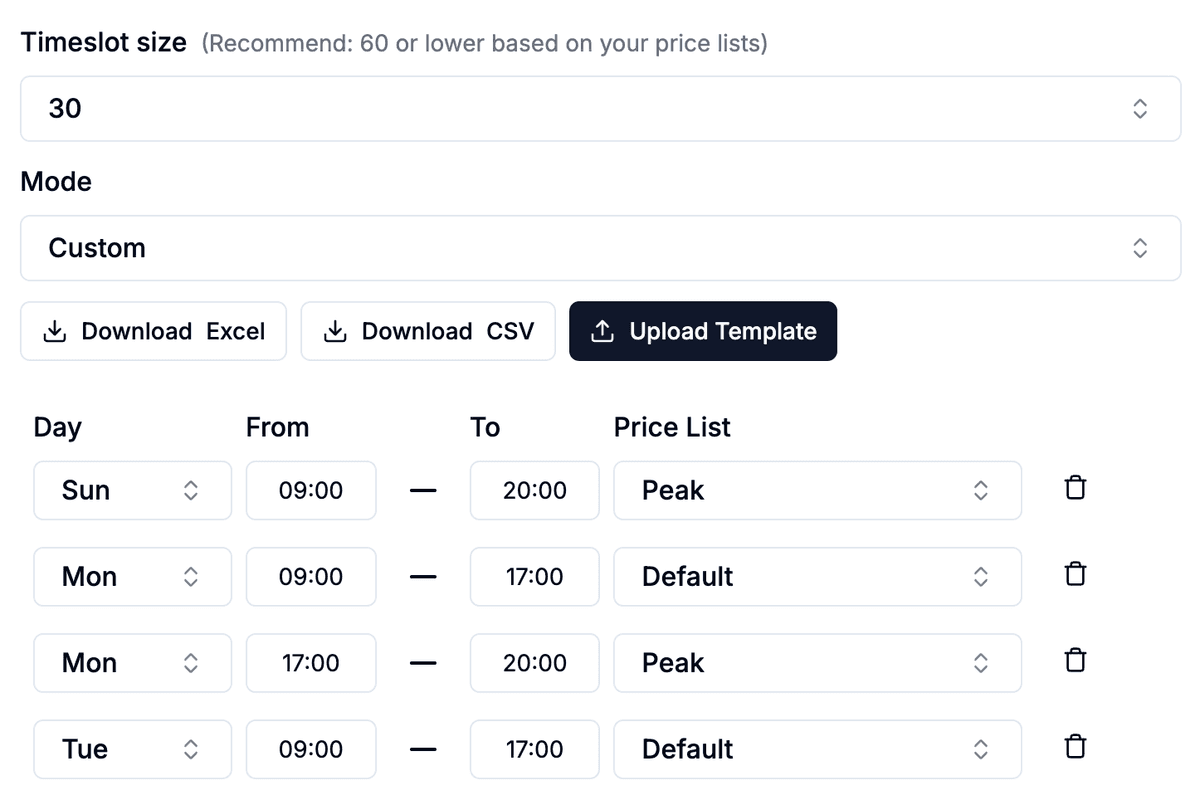
Most karaoke venues charge a flat per-person cover — the same rate regardless of group size or time of day. It's simple to communicate but leaves revenue on the table in both directions. A two-person group booking a sixteen-person VIP suite should pay a premium for the exclusivity. A full group of sixteen filling the same room should get a better per-head rate that reflects the economics of a full house. SKEQ's price lists handle both — configure each tier as its own price list and assign it to the relevant slot. The same logic applies to peak and off-peak. A Friday 9pm slot and a Tuesday 3pm slot don't carry the same demand — and shouldn't carry the same price. Each slot can be assigned a different price list, so customers see the rate that applies to the time they want without any ambiguity.
Every Room on One Page — Filterable by Availability and Price
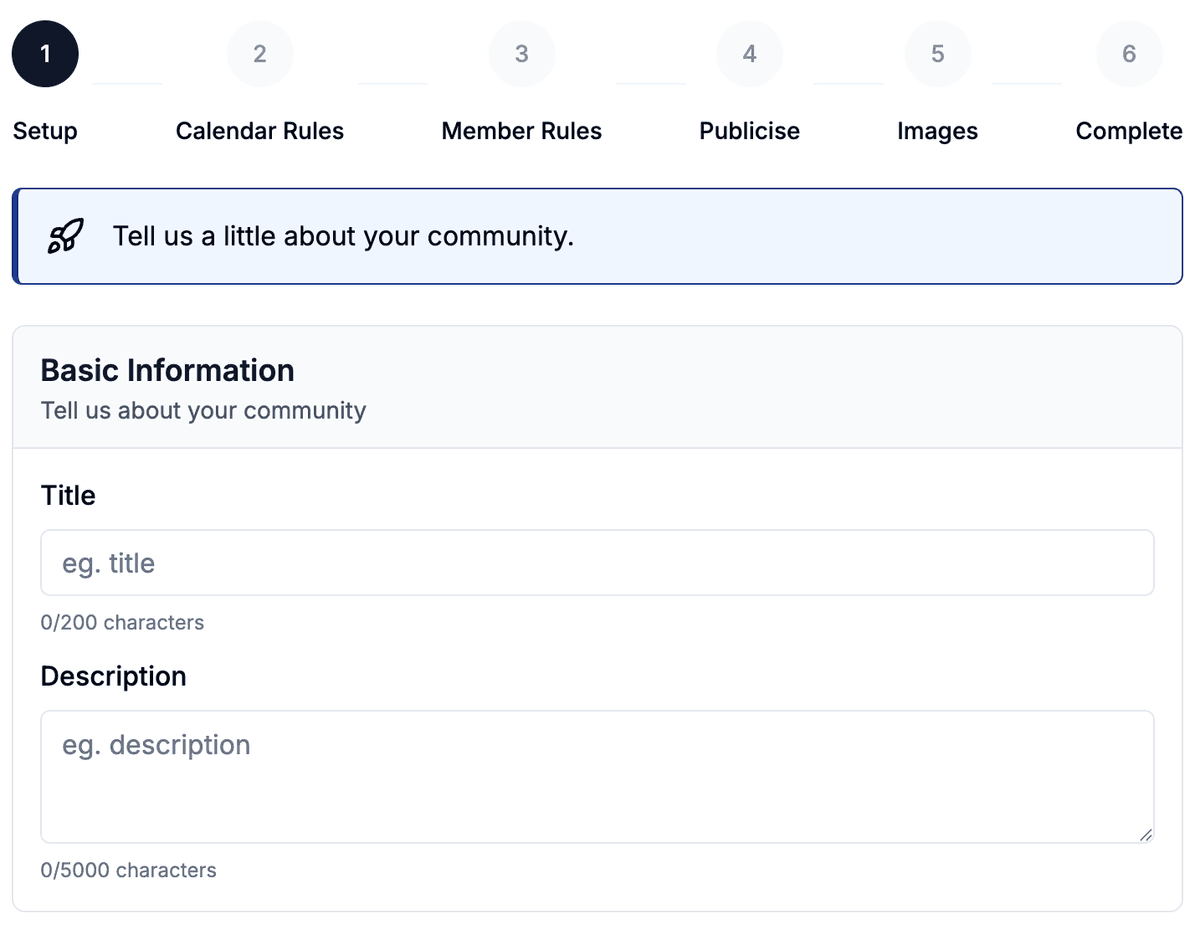
Group every room calendar under a single SKEQ community and the venue gets one public page that does everything the phone call used to do — only faster, without the wait, and available at any hour. Every room, its capacity, its features, its pricing, and its available slots are visible in one place. Customers can filter by availability to see only what's open for the date and time they want — no scrolling past rooms that are already full, no asking which ones are free. A group of ten looking for a Saturday evening slot with a pool table can narrow down to exactly that in seconds. The venue stops losing bookings to impatience and starts converting the customers who used to hang up before they got an answer.
Sell the Full Night — Not Just the Room
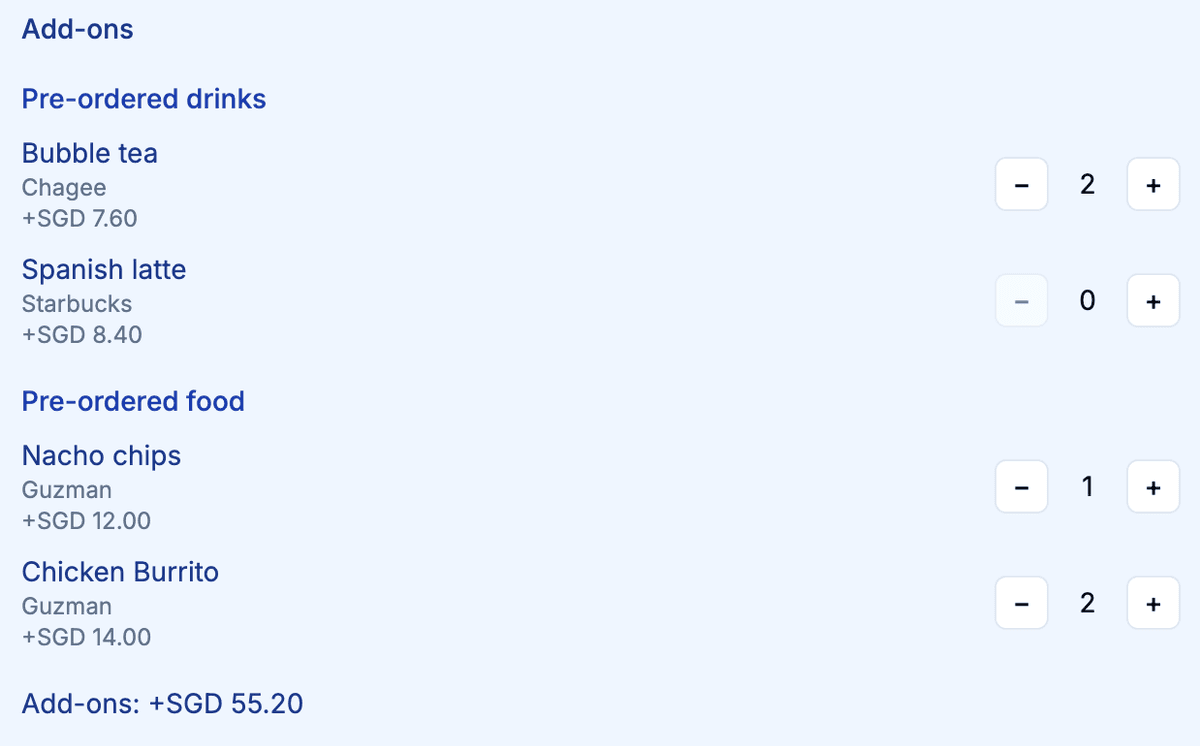
The room is only part of what a group orders. Snack platters, drink packages, free-flow options — these decisions are made at the point of booking anyway, or should be. Collecting them upfront through SKEQ's supplements and add-ons feature means the kitchen and bar know exactly what's coming before the group walks in, and the upsell happens during booking rather than at the door where it's easy to decline. Each add-on is priced and reflected in the booking total at confirmation — no surprise charges when the group arrives, no confusion about what's included. A group that books the VIP suite with a free-flow drinks package and a snack platter has committed to more than just the room, and the venue has a confirmed order to prepare for before the session starts.
Match the Booking Flow to the Room — Not the Other Way Around
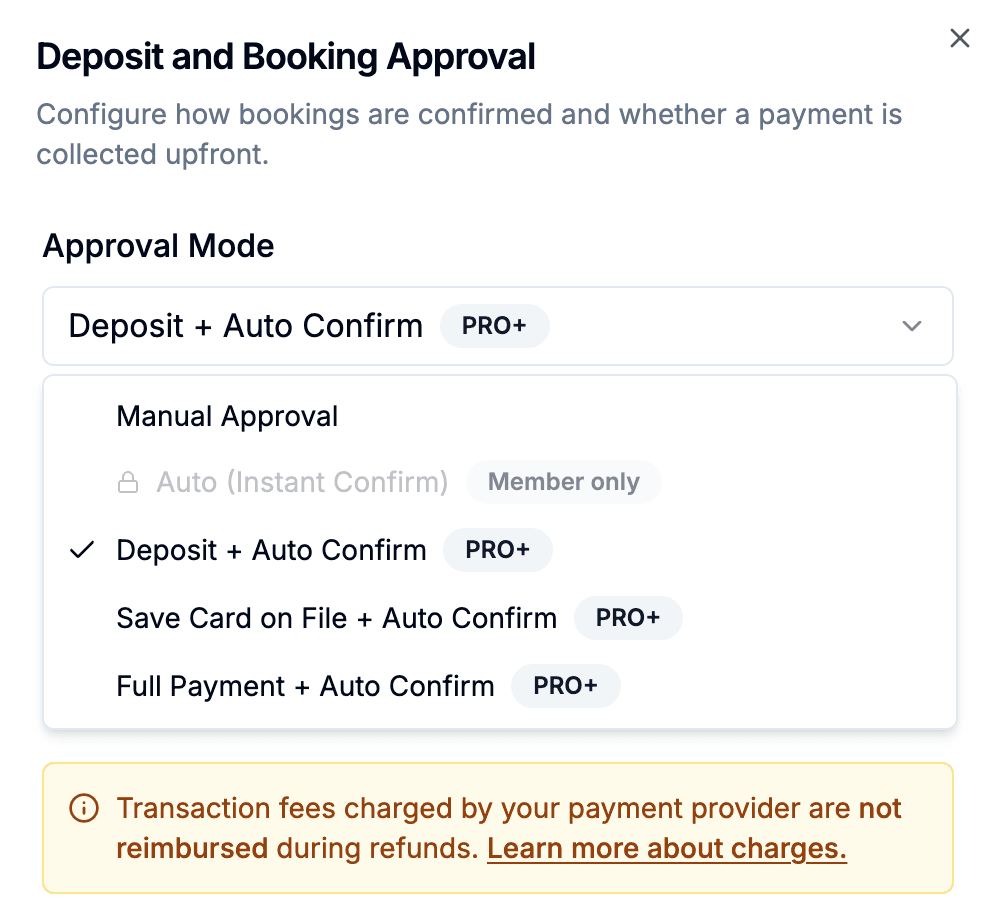
Because each room is its own calendar, each room can have its own booking approval flow. A small two-person room and a sixteen-person VIP suite are very different commercial situations — and the commitment mechanism should reflect that. For small rooms that move fast and typically booked by young adults, requiring a credit card deposit adds friction that loses the booking. Manual approval keeps it frictionless — the venue reviews and confirms quickly, and the customer doesn't need to enter payment details to secure a low-risk slot. For a sixteen-person VIP suite cancelling last minute is a significant revenue loss. Set the deposit to the minimum viable booking — 8 pax at the standard rate. A group booking the room pays 8 × $15 = $120 upfront to confirm the slot, with the balance settled on arrival based on actual headcount. The room is protected. The group is committed. Supplements are settled separately on the night.
A Cancellation Policy That Lets You Earn Twice
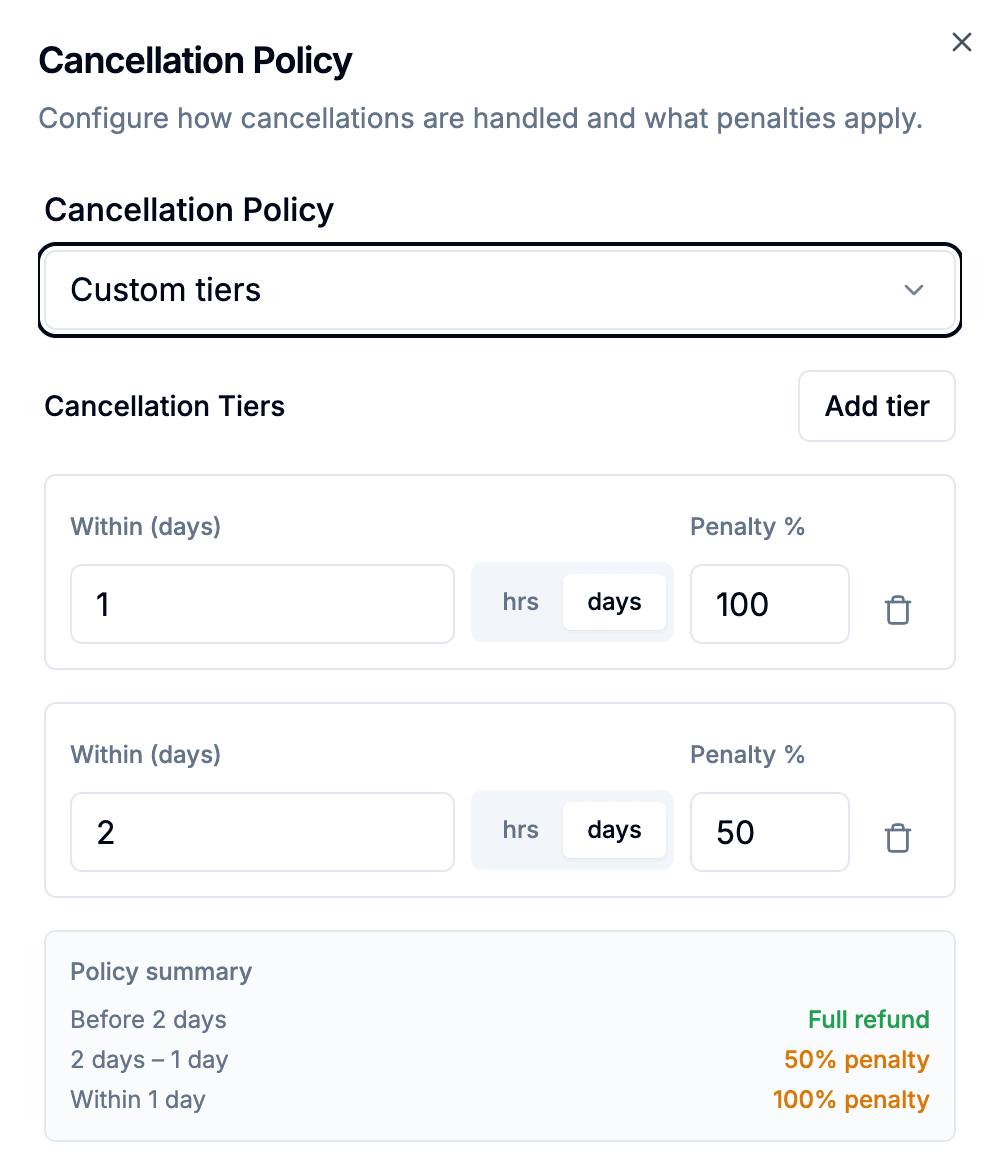
Most venues default to a blanket no-refund policy. It protects revenue on paper but misses a bigger opportunity — particularly on popular rooms that fill consistently on Friday and Saturday nights. SKEQ's cancellation tiers let operators set time-based penalties that work harder depending on when the cancellation happens. Configure the total cancellation fee at 100% of the deposit value. Before one week out, enforce a 50% penalty — enough lead time to relist the slot and fill it again at full price, earning 50% from the cancellation on top of a brand new booking. After one week, the full 100% kicks in — late cancellations are covered entirely regardless of whether the room gets refilled. Either way, the room never loses.
Keep the Party Going Between Sessions
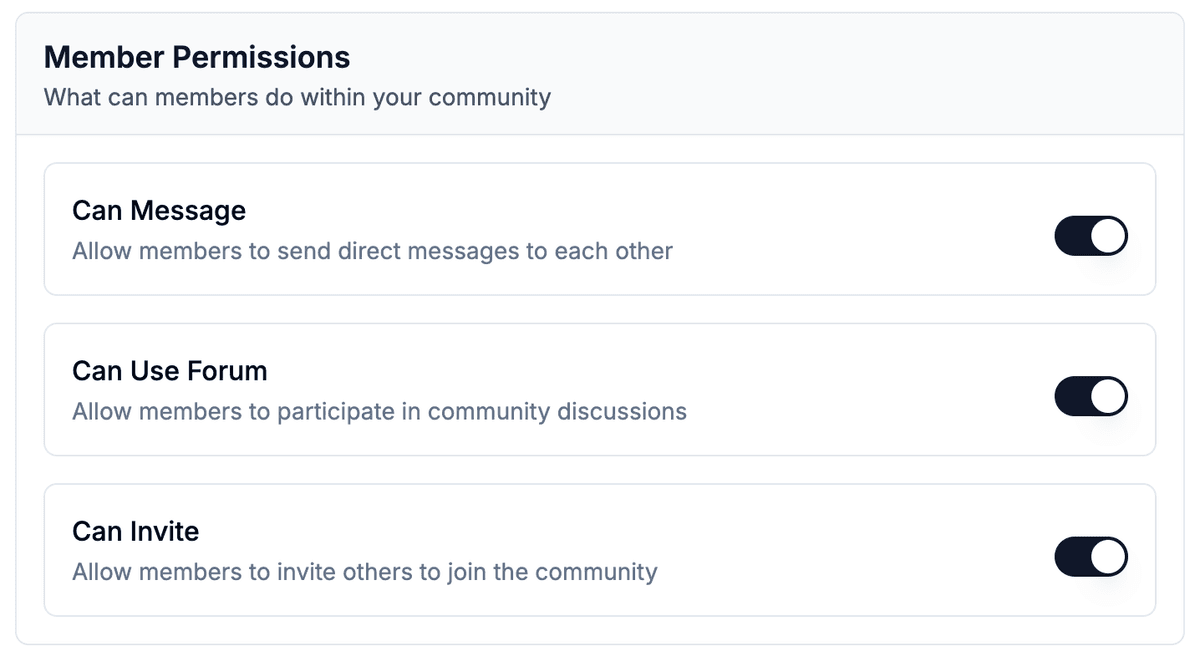
Karaoke regulars don't just book rooms — they follow the scene. New song packs added to the system, upcoming promotions, singing competitions, themed nights — this is the content that brings a community back month after month. The SKEQ community forum gives venues a space to post it all directly to the members who care most, in a context they've already chosen to be part of. Members can respond, organise group bookings around upcoming events, and hype each other up for the next competition — all within a members-only space that stays relevant and free of noise from outside. An announcement about a singing competition lands differently in a community of regulars than it does as a generic social post. The context is everything.
Membership Has Its Perks — First Access to the Best Slots
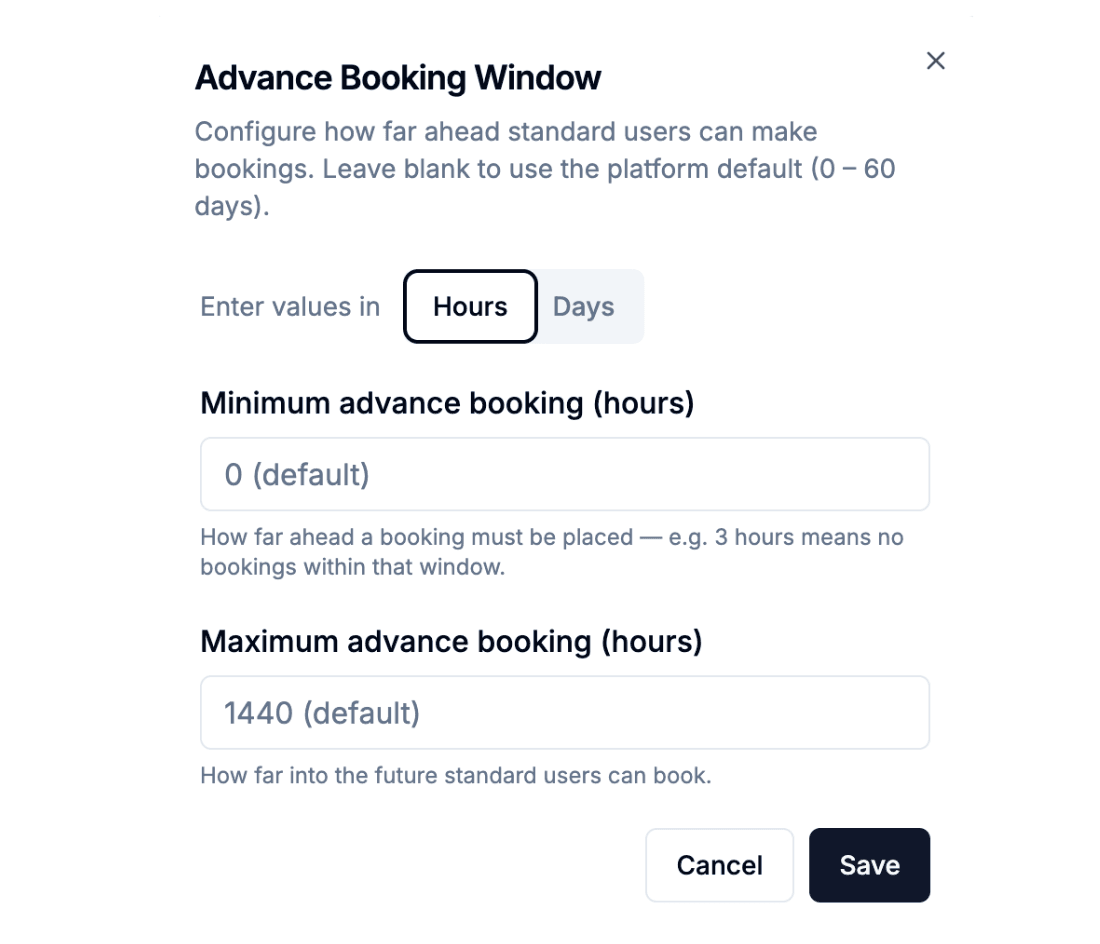
Friday and Saturday peak slots fill fast. The regulars who come every week shouldn't have to compete with the general public for the rooms they've always booked. SKEQ's follower booking flow lets venues configure a longer advance booking window for community members — giving them first access to the schedule before it opens to everyone else. A non-member browsing the community page might see slots opening 7 days out. A member who follows the venue sees the same slots 14 or 21 days out — enough time to plan, coordinate the group, and lock in the VIP suite before it's even visible to walk-in customers. Priority access is a meaningful perk that gives regulars a tangible reason to follow the community and keep coming back.
Sell Credits, Lock In Regulars Before They Book Elsewhere
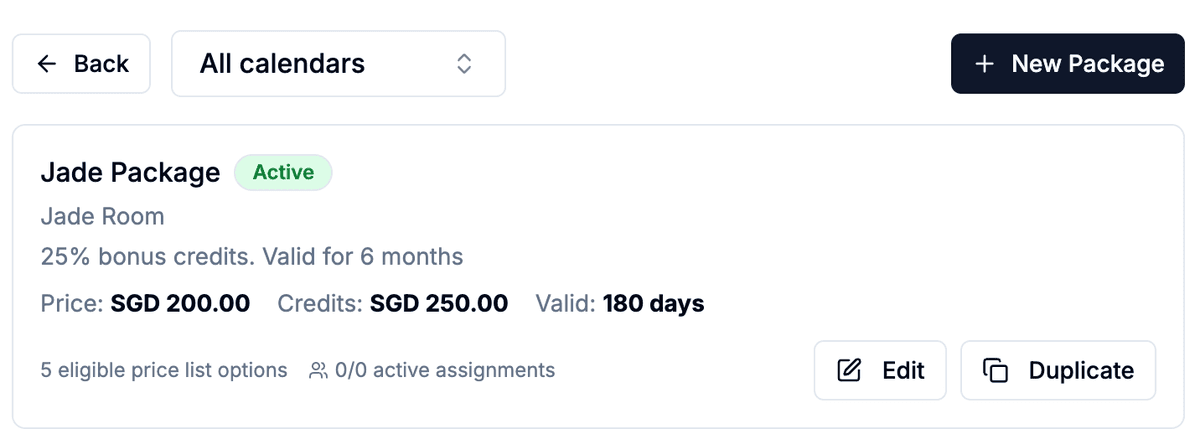
Credit packages are a staple of KTV loyalty — a discounted bundle purchased upfront that keeps regulars coming back until the credits run out. The problem is that most venues track them in a back-office system the customer can't see. Balances get forgotten. Credits expire unused. The loyalty mechanism that was supposed to retain customers quietly lapses without anyone noticing until the customer has already moved on to the next venue. SKEQ's packages feature brings the credit balance into the customer's account — visible, trackable, and ready to apply to the next booking directly. Renewal prompts fire automatically as the balance runs low, so customers top up before they lapse rather than after they've drifted away. Operators can configure carry-over credits, restrict packages to specific room tiers, and set expiry windows that fit the pace their regulars actually book at.
Let the Front Desk Run the Bookings
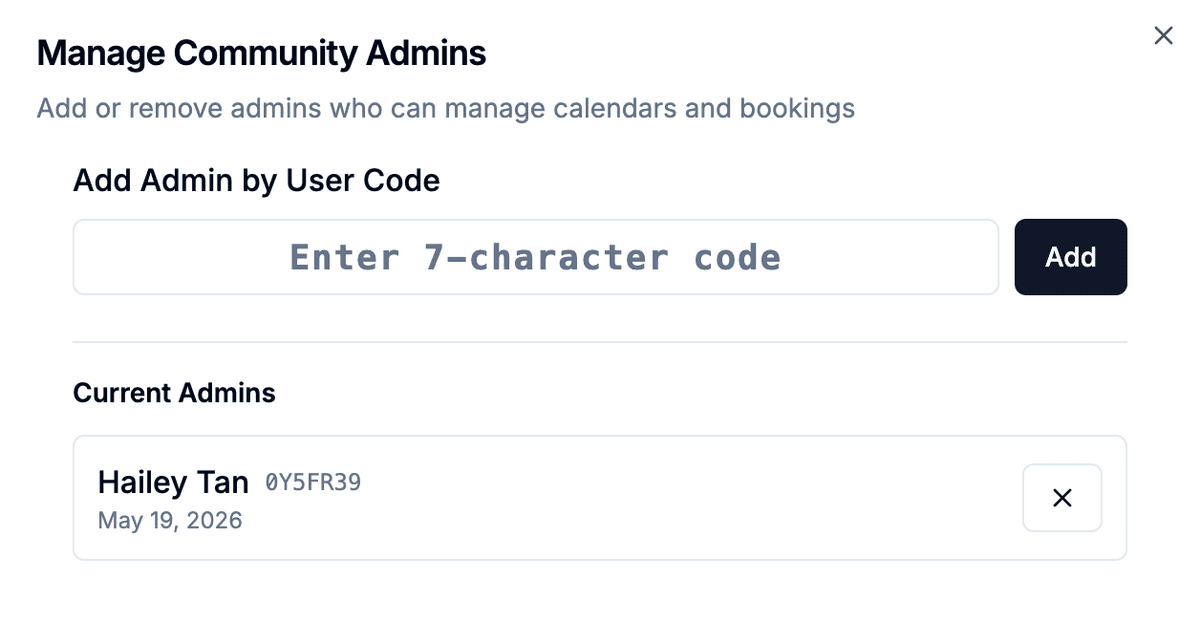
A KTV venue with multiple rooms running simultaneously has bookings coming in across every calendar at once. The owner can't review every request, respond to every message, and update every slot price in real time while the venue is operating. That's the front desk's job — and SKEQ's co-admin feature makes it possible. Assign a staff member as co-admin across any combination of room calendars. They can approve bookings, switch price lists as slots fill, respond to customer queries, and keep every room's availability current — without needing owner-level access to the account. The venue stays responsive across a busy Friday night without everything routing through one person.