Tour Operators & Experience Providers
Tours That Fill With Confidence — No Last-Minute Cancellations
Tour operators live and die by minimum group sizes. SKEQ lets customers see exactly how close a departure is to confirmed — and rewards early bookers with better pricing. Everyone knows where they stand, and the tour runs when it's ready.
Customers Book in Good Faith. Operators Cancel in Silence.
The tour gets cancelled — but only after the customer has planned around it
A tour that needs eight participants to run doesn't always reach eight before the departure date. When it doesn't, the operator cancels — often a few days out, when the customer has already arranged leave, booked accommodation, or told their family they're going. The cancellation is legitimate. The timing is damaging. And the customer who planned around a trip that was never truly confirmed leaves with a frustration that's hard to reverse. Most booking platforms offer no way for customers to see how close a tour is to viability before they commit.
No incentive for customers to book early
Early bookings are what give operators the confidence to commit — to guides, to transport, to accommodation. But most platforms offer the same price regardless of when a customer books. There is no structural reason to book in January for a March departure instead of waiting until late February to see if it's confirmed. The result is a booking pattern that front-loads risk for the operator and pushes commitment from customers to the last possible moment — precisely when the operator needs it earliest.
Pricing that doesn't reflect how tour economics actually work
A tour with two participants and a tour with twelve don't cost the same to run per head. Fixed costs — the guide, the transport, the permit — are split differently at different group sizes. Most platforms show a flat per-person rate that ignores this entirely, leaving operators either underpricing large groups or overpricing small ones. A tiered pricing structure that reflects the real economics — lower per-person rates as the group fills, higher rates when numbers are thin — serves both sides better and gives customers a reason to act early.
How SKEQ Supports Tour Operators and Experience Providers
Every Destination Its Own Calendar — Every Departure Its Own Slot
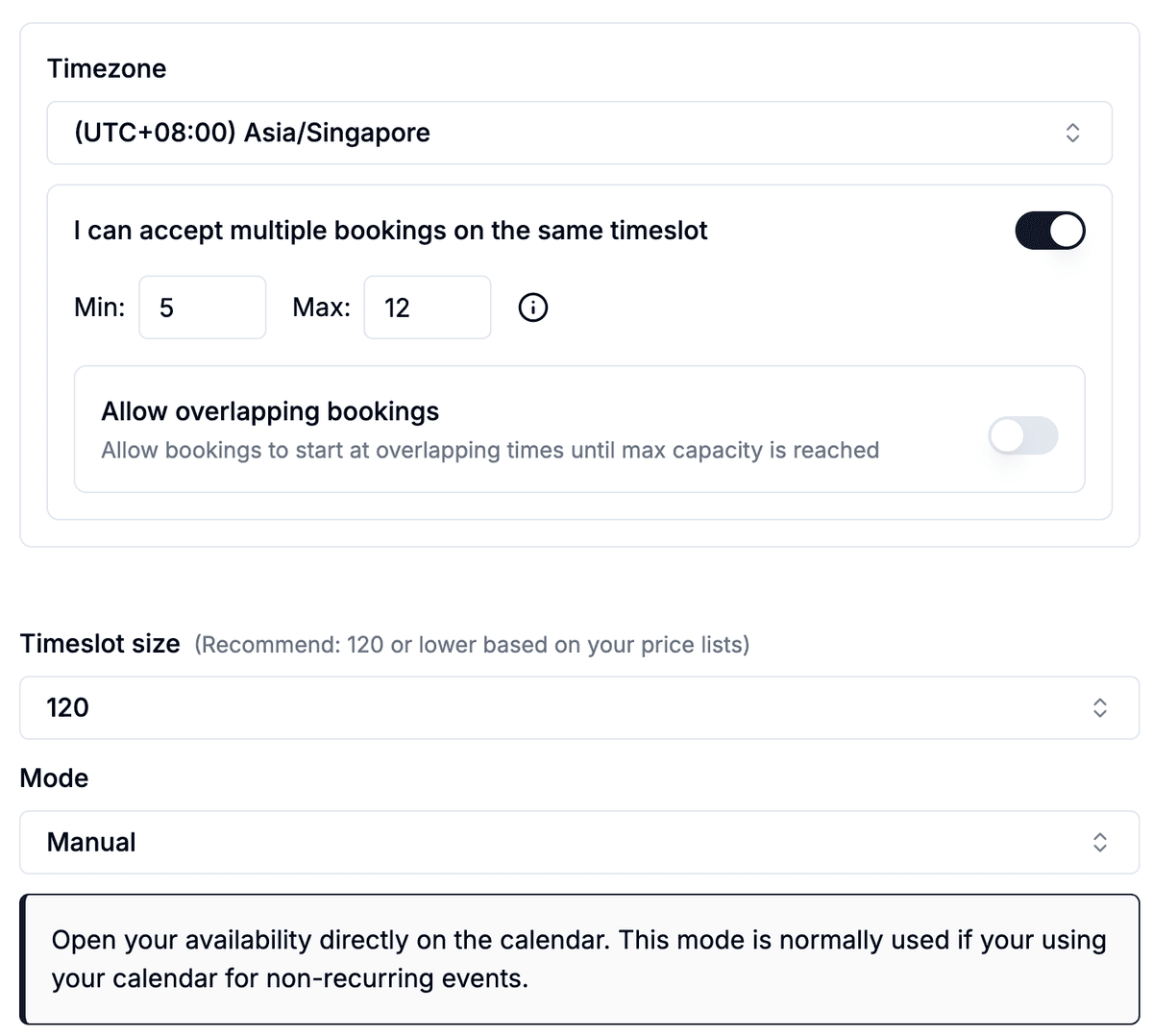
Each tour destination gets its own SKEQ calendar — Thailand, Bali, Japan — each with its own departure slots, its own capacity limits, and its own booking page. Rather than opening a fixed recurring schedule, set the availability to manual mode and open each departure individually as it's confirmed and ready to fill. This gives operators full control over which tours are live at any point and ensures customers only ever see departures that are genuinely available. For each departure slot, set the minimum and maximum participant count. The minimum is the number the tour needs to run — the threshold below which it isn't viable. The maximum is the cap the experience is designed for. As customers book in, SKEQ tracks the running headcount in real time. Customers browsing a departure can see exactly how many spots have been taken and how many remain — giving them the context to make a confident decision rather than booking into the unknown.
Reward Early Bookers — Charge More as the Tour Fills
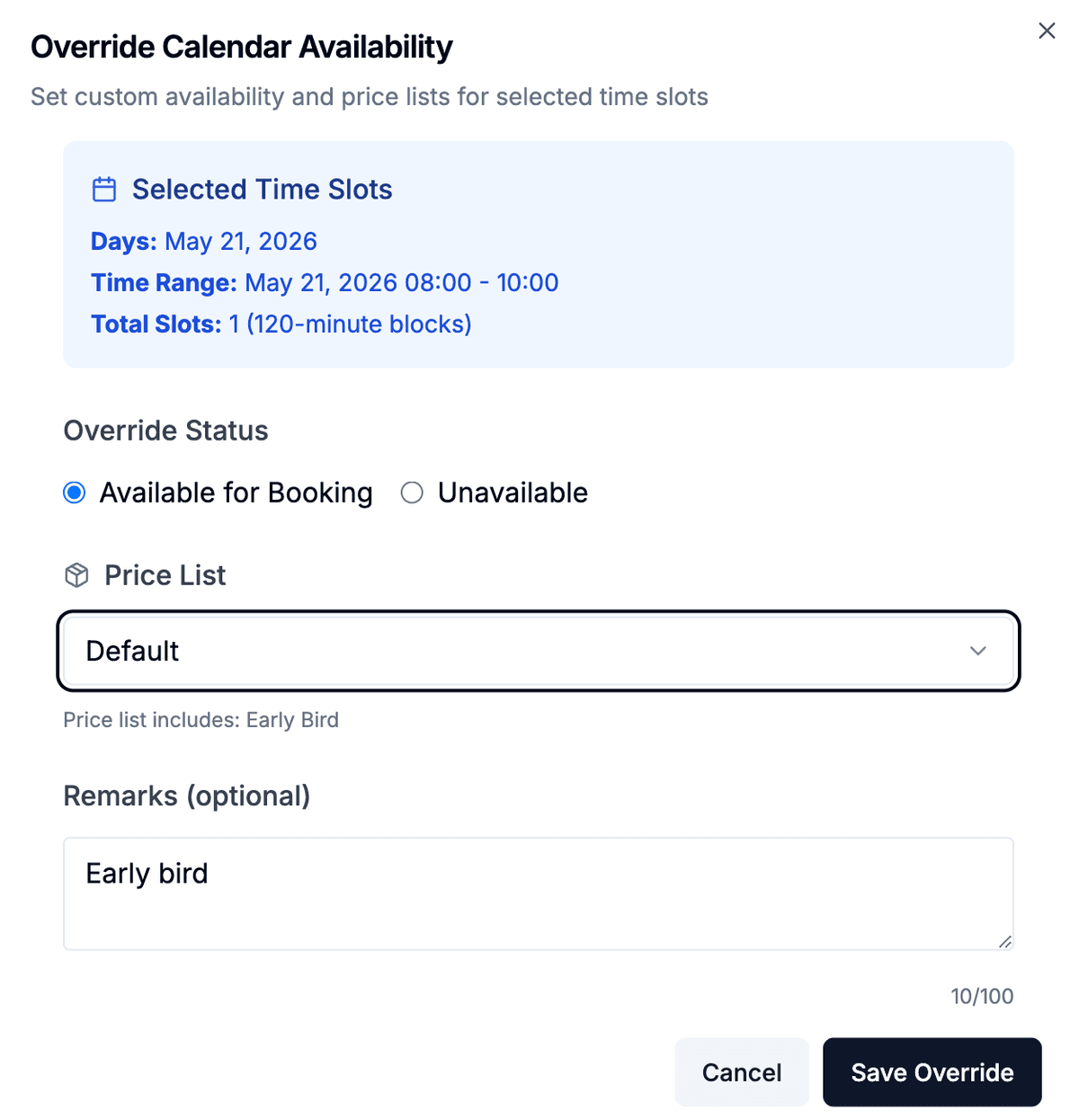
SKEQ lets operators build multiple price lists and assign each one to a departure slot manually — switching the active price list as the tour progresses through its fill stages. An early-bird rate before the minimum is met, a standard rate once the tour is confirmed, and a late rate closer to departure for last-minute bookings. Operators go to the slot, click edit, and select which price list to display — the change is immediate and visible to anyone browsing. This pricing structure does two things at once. It gives early customers a genuine reason to commit before the minimum is reached — their reward for taking the earliest risk is the lowest price. And it gives operators a lever to recover margin from last-minute bookings, where the logistics are already locked in and the incremental cost of an additional participant is low.
Open the Full Year — Let Customers Plan Ahead
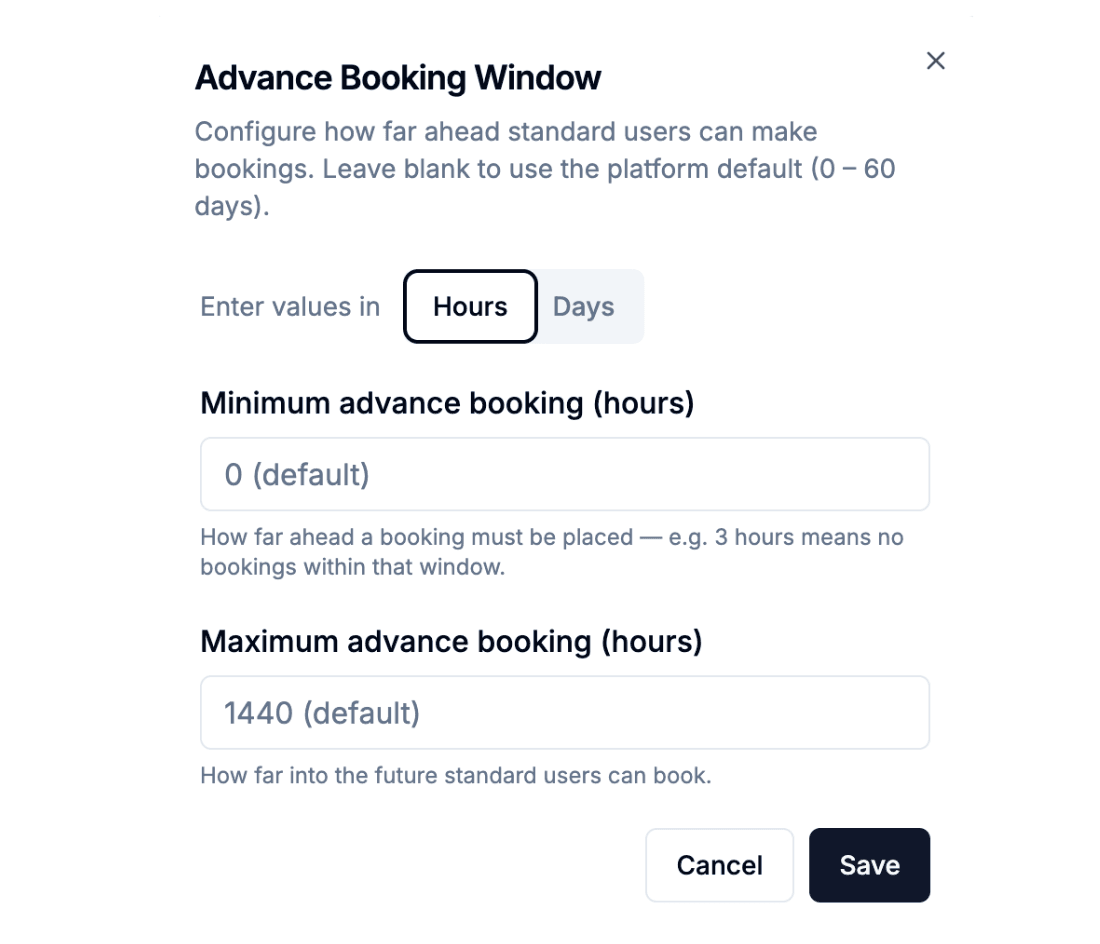
Unlike most services where a 30-day window is sufficient, tours require customers to plan months in advance — leave applications, travel insurance, companion coordination, and budget planning all need time. Setting the advance booking window to the maximum of 360 days ensures the full year of departures is visible and bookable from the moment a slot is opened. A customer who spots a March Thailand departure in October has five months to commit, benefit from the early-bird rate, and plan around it properly. One who finds the same departure in February has three weeks. The earlier the booking window opens, the earlier the operator collects the commitments that make a departure viable — and the earlier the early-bird pricing drives action rather than waiting.
A Booking That Starts a Conversation, Not Just a Confirmation
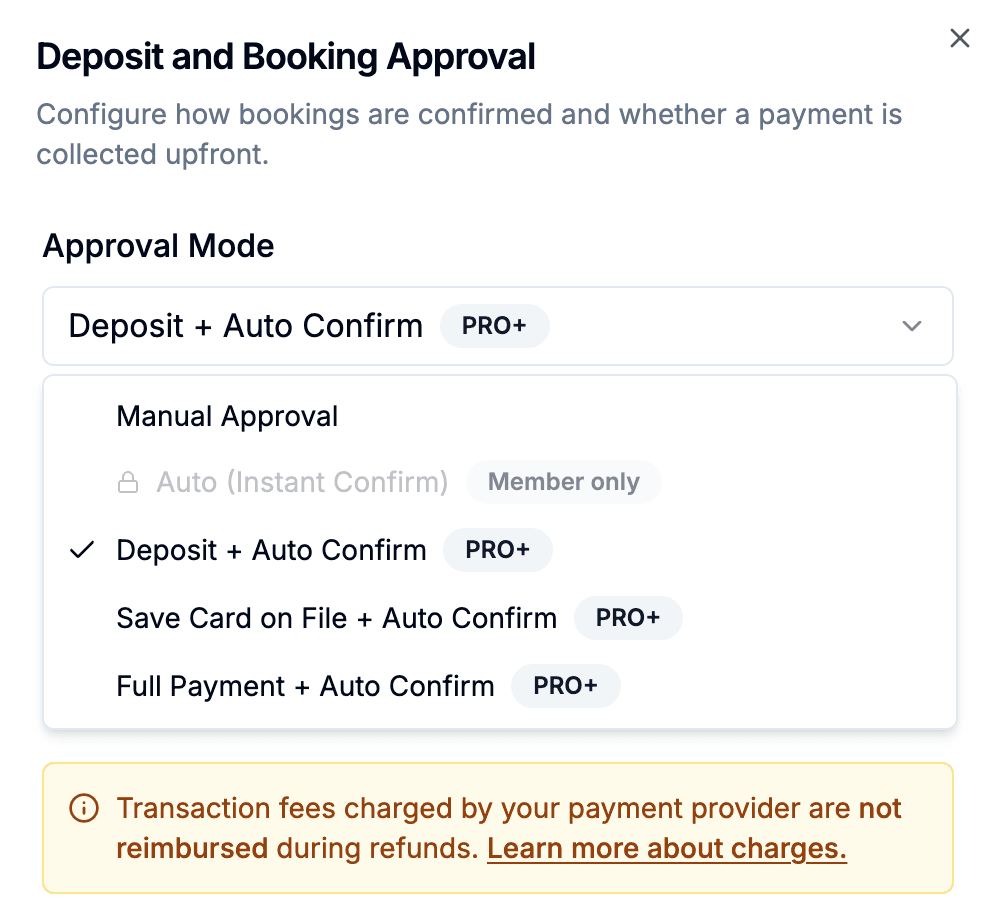
A tour booking is not a small transaction. The quantum is significant, the itinerary is complex, and most customers want to speak to someone before they commit fully — to ask about inclusions, confirm the departure is going ahead, understand the cancellation terms, and often to pay in person at the operator's office rather than through an online form. Manual approval is the right setting here. A booking request comes in — the operator reviews it, reaches out through in-app messaging to answer questions, confirms the details, and approves once both sides are aligned. The customer isn't auto-confirmed into a trip they may still have questions about. The operator isn't processing a payment for a booking that hasn't been properly briefed. The approval step is the beginning of the relationship, not just the end of the transaction.
One Page for Every Tour You Run
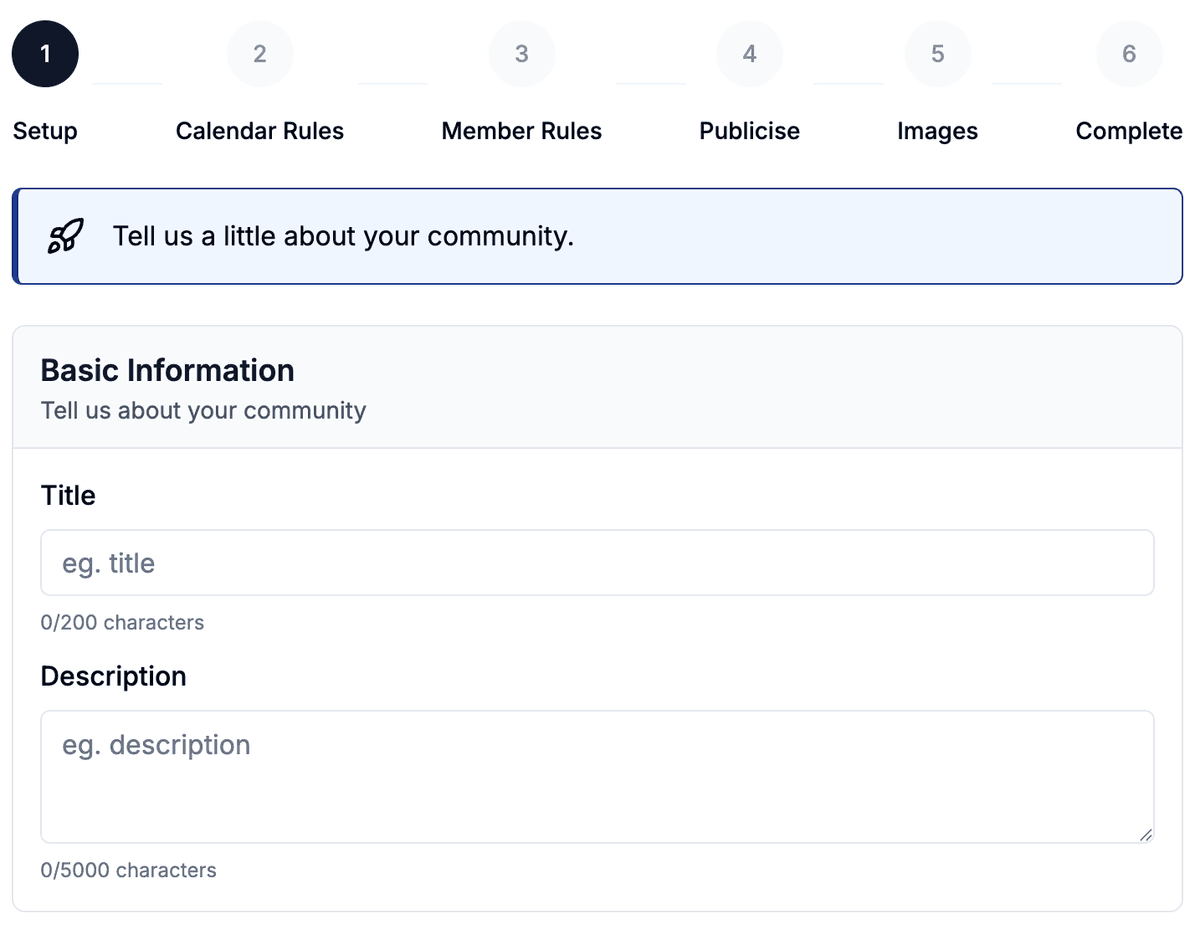
Group every destination calendar under a single SKEQ community and the operator gets a public-facing tour catalogue — one page where customers can browse every available departure, see how full each one is, compare timing and pricing, and book directly without navigating multiple links. A customer who came for the Thailand tour but sees a Japan departure at the early-bird rate with seats still available has a reason to explore further. A customer who can't find availability on their preferred date can browse alternatives and find something that works — without the operator having to respond to an enquiry. The community page does the browsing for them.
Distribute the Workload Across Your Team
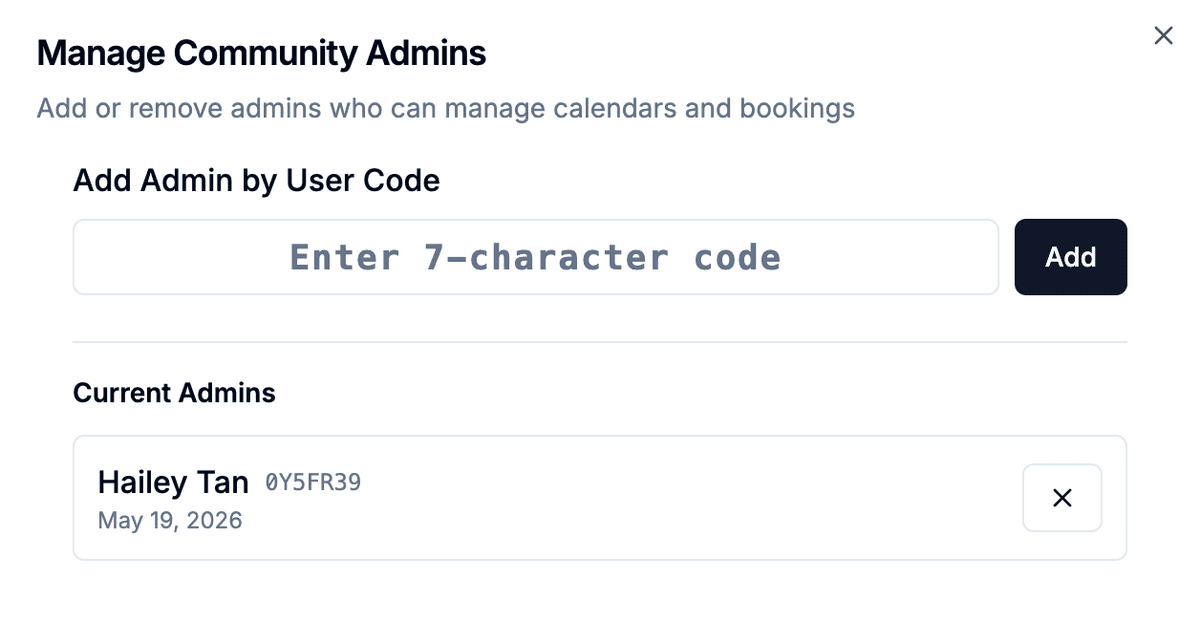
A tour operator managing multiple destinations and multiple departures simultaneously has more booking requests, more customer conversations, and more approval decisions than any one person can handle without it becoming a bottleneck. SKEQ's co-admin feature lets the operator assign staff to manage bookings across any calendar — reviewing requests, responding to customer messages, updating slot pricing, and approving when the details are right. A sales consultant who handles Thailand departures can be given access to those calendars specifically. An operations manager can oversee the full portfolio. The owner stays across everything without being the single point of contact for every booking that comes in.