

Pickleball Courts & Sports Venues
Court Booking That Keeps Every Court in Play
From pickleball centres to badminton halls and futsal courts, sports venues run on tight time slots and high turnover. SKEQ gives you the booking infrastructure to fill every court, manage every session, and keep players coming back.
One Venue, Four Very Different Booking Problems
Too many booking types, no single place to manage them
A sports venue isn't just court hire. On any given day it might be running hourly court bookings, a coaching session, a corporate event buyout, a weekend competition, and a visiting coach who needs court time. Each has different durations, different pricing, different headcounts, and different operational needs. Most booking platforms handle one of these well. None handle all of them under one roof — leaving operators to stitch together multiple tools or manage the rest manually.
Customers can't find what's available without calling in
A player looking for a court at 6pm on Thursday shouldn't have to scroll through a full calendar to find one. A beginner looking for a coaching slot shouldn't have to navigate the same page as someone booking court hire. When everything is dumped onto one undifferentiated calendar, finding the right slot becomes work — and customers who can't find it quickly don't book at all. Search that understands the type of booking and the availability behind it is what separates a venue that converts online from one that relies on WhatsApp to fill courts.
Social play is growing but nobody has built the right tool for it
Open social sessions — a court opened for eight players, two-on-two, intermediate level, two hours — are one of the fastest growing formats in pickleball and racket sports. Players want to show up, get matched, and play without the overhead of organising a full group themselves. But running this well requires more than just opening a slot. It needs skill-level filtering to keep the game fair, member-only access to keep it safe, and enough context for players to know what they're joining before they commit.
Pricing that can't keep up with how courts are actually used
Peak hours fill themselves. Off-peak slots sit empty. Bulk deals incentivise regulars but are too complicated to communicate clearly. Most booking platforms offer a flat rate and nothing more — leaving operators to either undercharge during high-demand windows or watch courts sit idle mid-week because there's no incentive to book them. Dynamic pricing configured directly to each slot is not a luxury feature for a sports venue; it's the difference between a full programme and a half-empty one.
How SKEQ Supports Pickleball Courts and Sports Venues
One Community, Every Service Your Venue Offers
Everything starts with a SKEQ community. It's the single page that brings together every calendar the venue operates — court hire, training sessions, social play — under one discoverable destination that players can search through in one place. A player hunting for a court at 7pm on Friday, or browsing to see if there's a cheaper off-peak slot earlier in the day, gets the full picture immediately — availability and pricing across every session type, without having to ask.
Each Court, Its Own Calendar and the Right Price for Every Hour
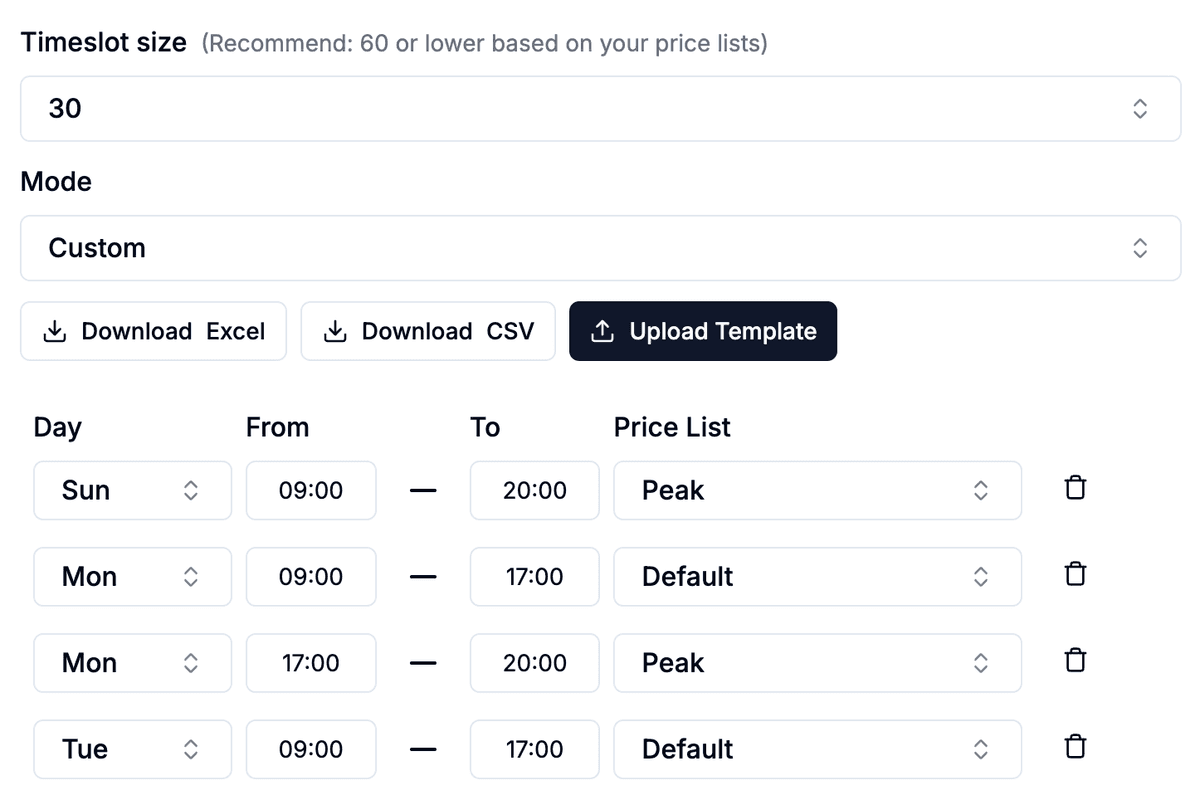
In SKEQ, each court is its own calendar — with its own availability, its own time slots, and its own price lists assigned directly to each slot. An off-peak slot at 4pm carries one rate; the peak slot at 5pm carries another. Each is configured once and applies automatically every day without manual intervention. Where SKEQ stands apart is how it handles multi-hour bookings that span a pricing boundary. A player booking two hours starting at 4pm gets a single booking that correctly totals the off-peak and peak rates across both hours — $20 for the first, $30 for the second, $50 in all. Most booking platforms can't do this. They either force the player to make two separate bookings or charge a flat rate that misprices one of the hours.
Full Payment Upfront, No Chasing on Court Day
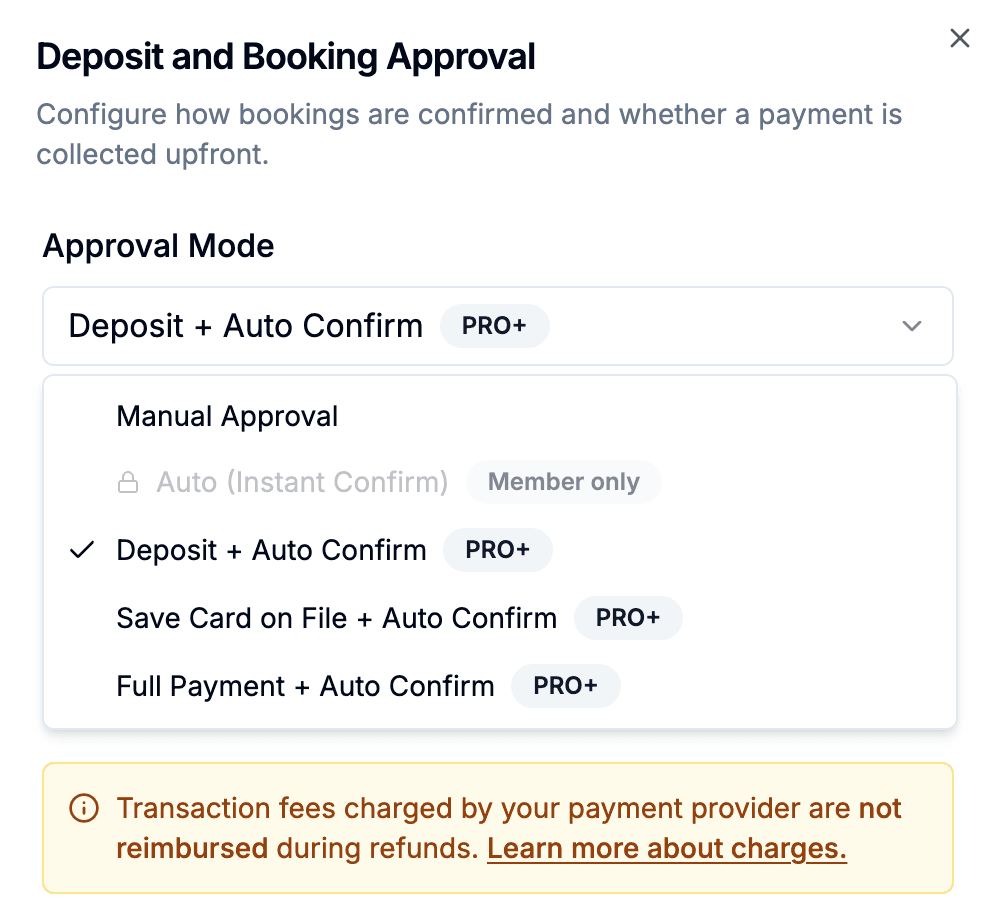
Full payment at the point of booking is already standard practice across most sports venues — and for good reason. Courts are time-limited assets. A no-show without payment means an empty court that can't be recovered. Collecting upfront removes that risk entirely and means staff can focus on running the venue rather than collecting payment at the door. SKEQ supports auto-approval with full payment, confirming the booking instantly once payment clears. For Singapore-based venues, we recommend enabling PayNow as the primary payment method. Card transactions carry a processing fee that adds up quickly at volume — PayNow minimises that cost, keeping more of each booking in the operator's pocket.
A Cancellation Policy That Lets You Earn Twice
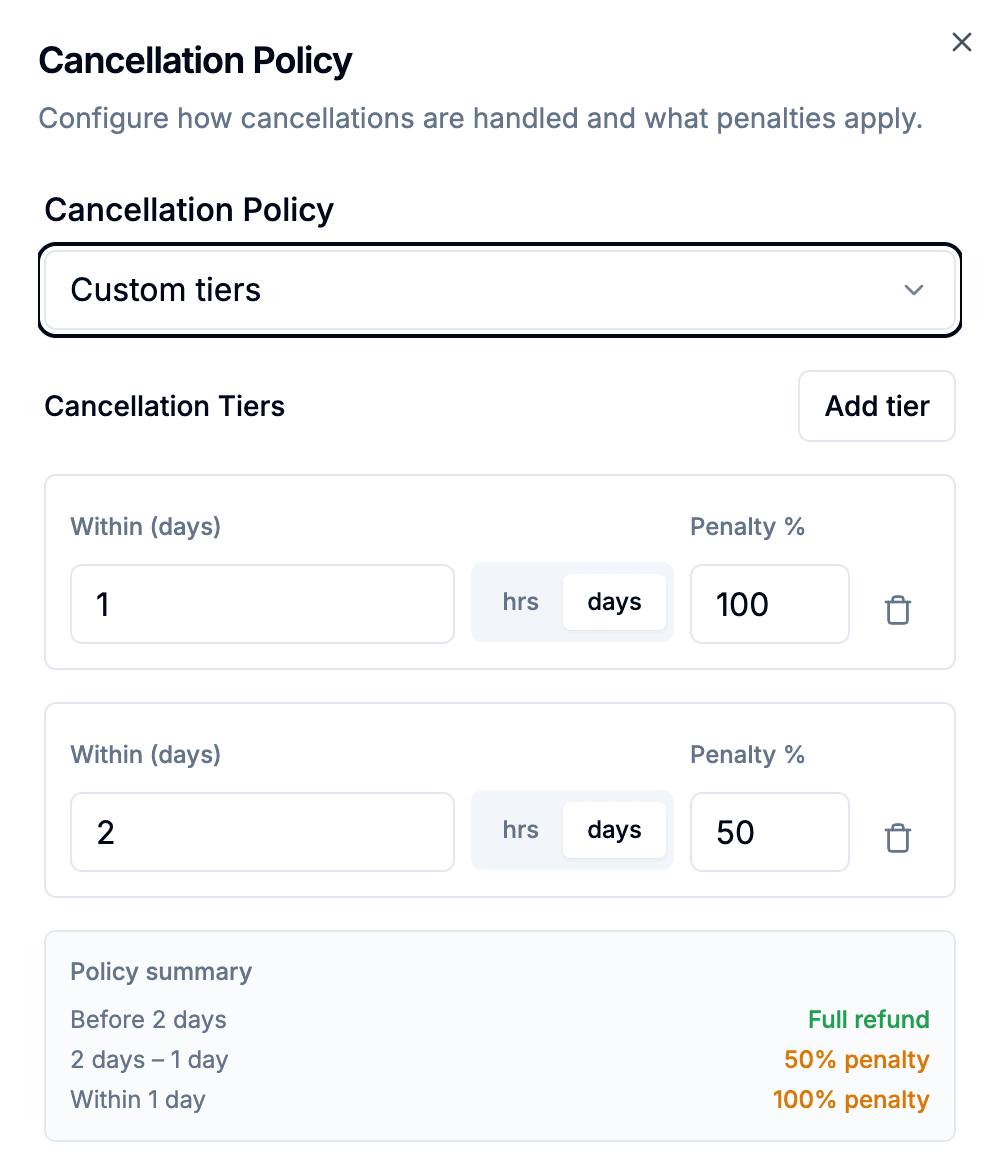
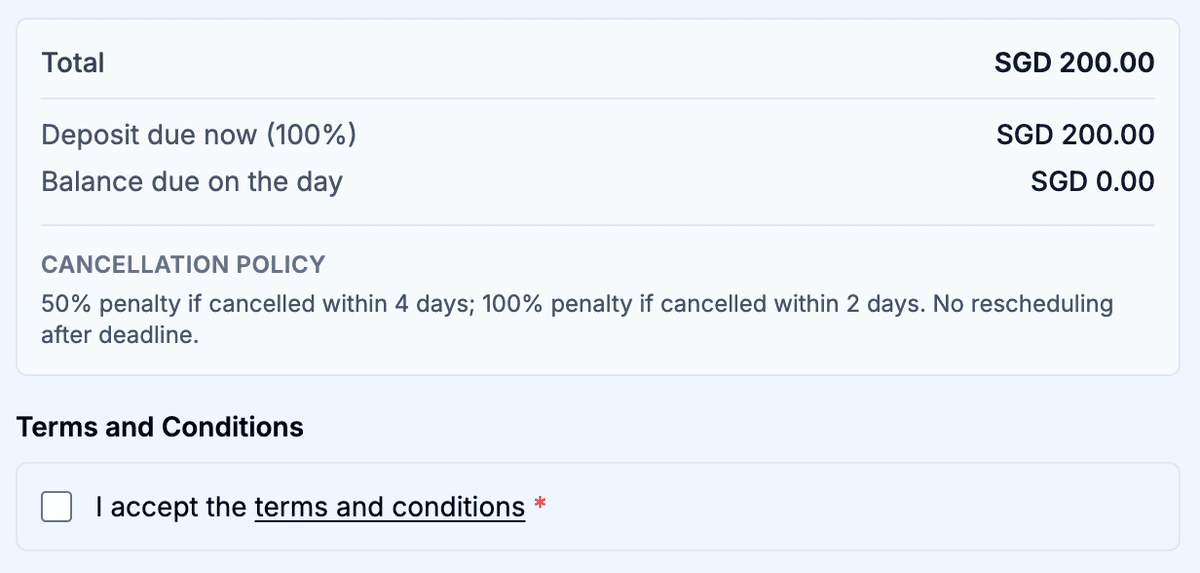
Most venues default to a blanket no-refund policy. It protects revenue on paper but misses a bigger opportunity. SKEQ's cancellation tiers let operators set time-based penalties that work harder depending on when the cancellation happens. Configure the total cancellation fee at 100% of the booking value. Before one week out, enforce a 50% penalty — enough lead time to relist the slot and fill it again at full price, earning 50% from the cancellation on top of a brand new booking. After one week, the full 100% kicks in — late cancellations are covered entirely regardless of whether the slot gets refilled. Either way, the court never loses.
Consent Before They Step on Court
Court rules, liability waivers, cancellation terms — sports venues carry real operational and legal requirements that every player needs to acknowledge. Collecting that consent at the door slows things down and creates gaps in the record. SKEQ lets operators attach terms and conditions directly to the booking flow. Players read and accept before the booking confirms — so by the time they arrive, consent is already on record and the session can start without paperwork getting in the way.
Organize Social Play Sessions and Earn More
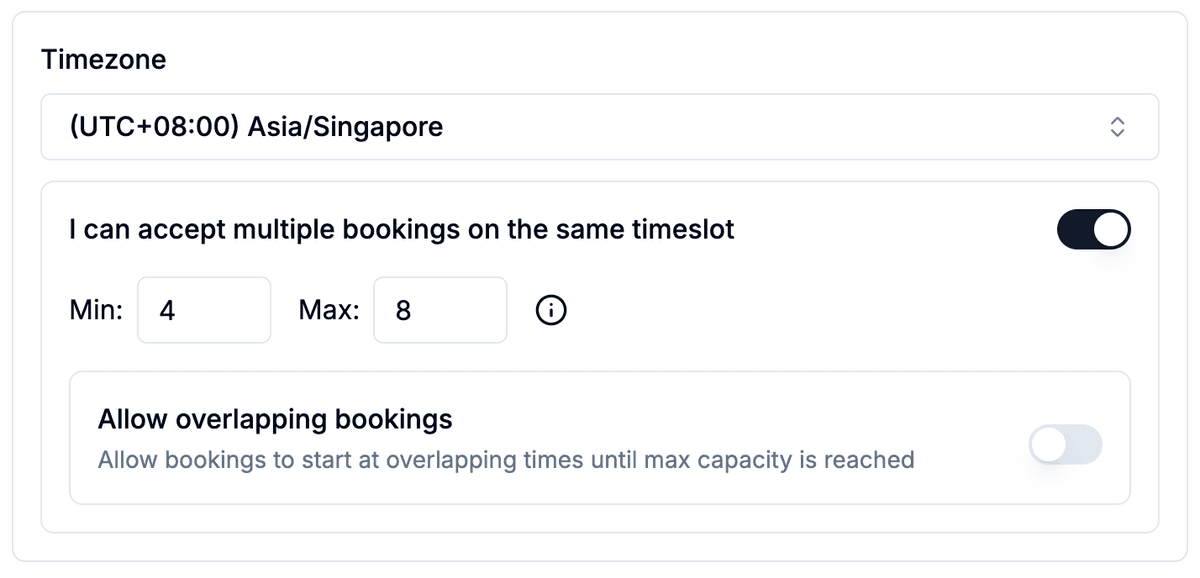
Not every player has a ready-made group. Social play sessions solve that — a court is blocked for a set window, opened as individual slots, and players book in independently to join a shared game. No group organising required, no waiting to have enough friends available. Just show up and play. The economics work well for operators too. A standard two-hour peak court booking earns $60. The same court run as a social session with eight individual slots at $10 each earns $80 — more revenue from the same court, same hours, with players who might never have booked otherwise. Start with one or two social slots per week and scale up as demand builds.
A Place for Players to Talk, Organise, and Connect
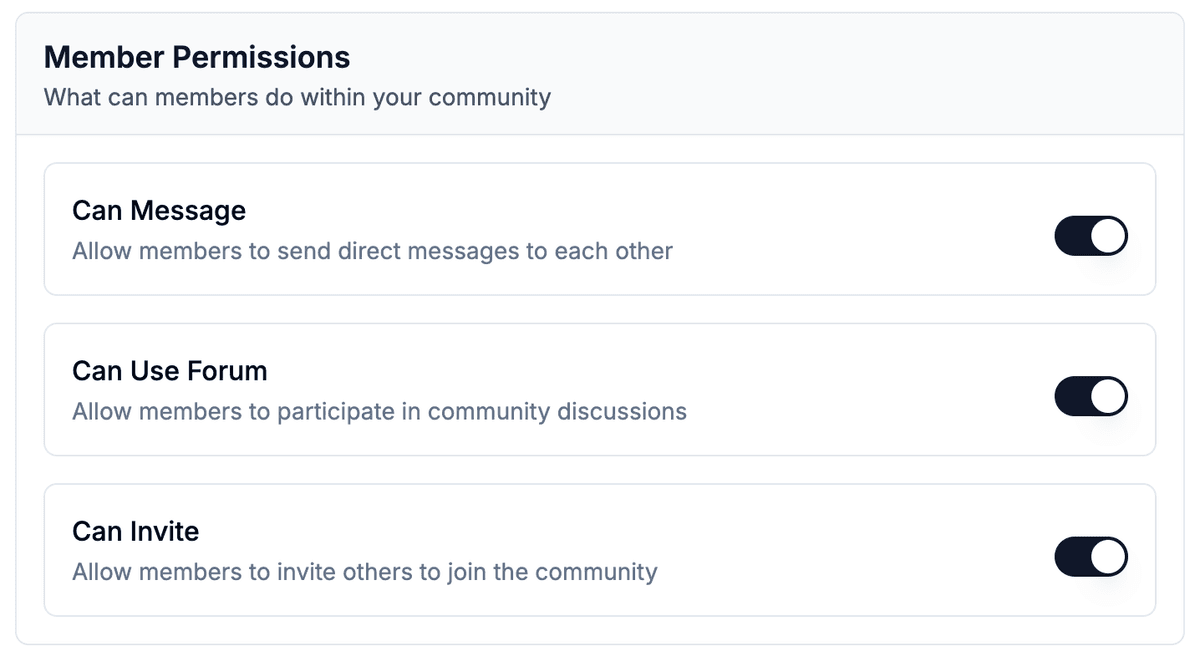
The game doesn't stop when the session ends. Players want to find opponents at their level, organise games, report lost equipment, and stay connected to the venue community between visits. The SKEQ community forum gives all of that a proper home — members only, in context, without it spilling across five different WhatsApp groups. Operators can seed the conversation — announcing new social sessions, posting competition details, flagging lost and found items. Players take it from there. Some will use it to recruit for games, others to find a hitting partner at their skill level. Occasionally a member may even post to find someone to take over their slot — a natural community behaviour that operators can choose to allow or moderate as they see fit.
One Court, Three Tiers of Access — Zero Double Bookings
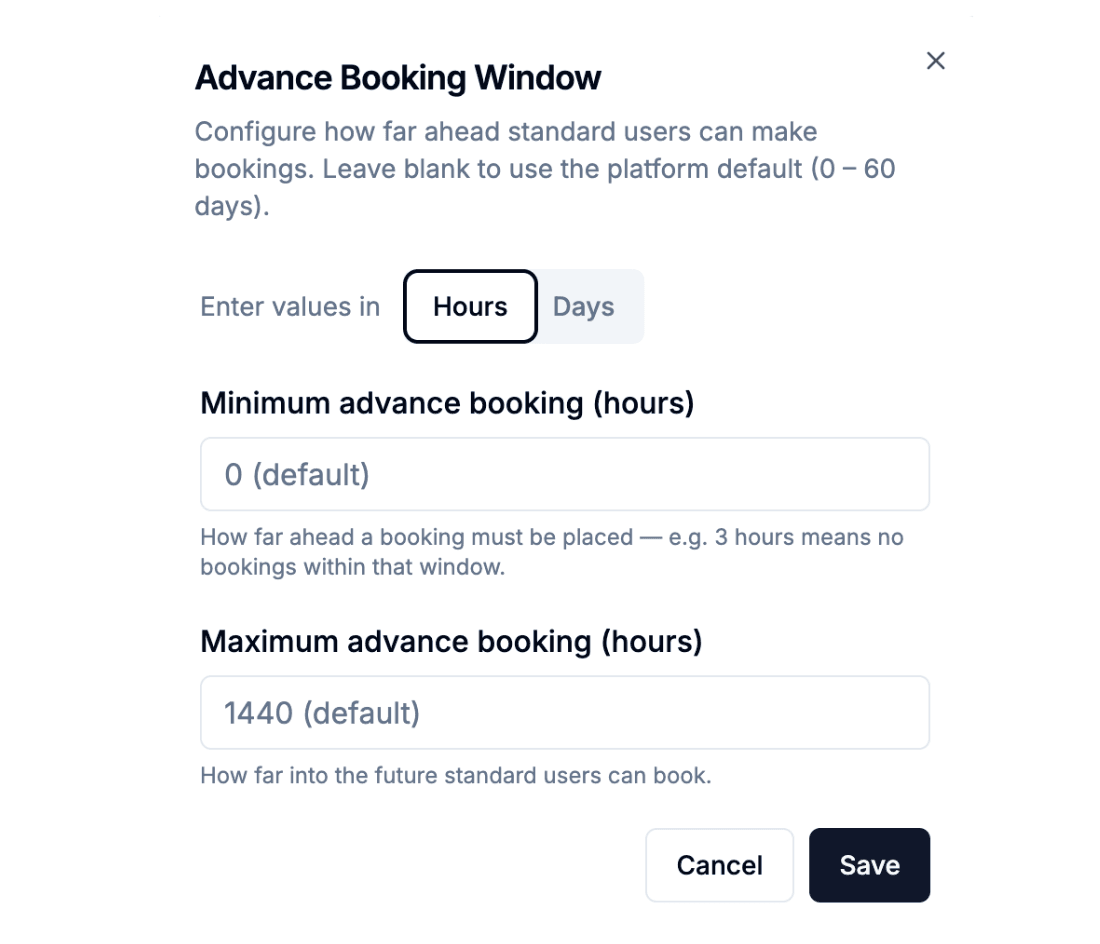
The same court can serve three very different booking types — regular players, coaches, and event organisers — each with different pricing, different access, and different booking windows. The way to manage this on SKEQ is with multiple calendars for the same court, all synced to a single Google Calendar so a booking on any one of them automatically closes the slot on the rest. Public calendar — regular court hire (0-30 days) Open to all players. Standard court pricing. Visible on the community page for anyone to book. Private calendar — coaching sessions (30-45 days) Access shared with coaches only. Higher rate — coaching earns more per hour and should be priced accordingly. Coaches get a longer advance window so they can plan their programme before regular bookings open. Public calendar — events and buyouts (45-60 days) For corporate events, competitions, and full-venue buyouts. The longest window ensures high-value bookings are secured well before any other calendar opens — and the slot closes on every other calendar the moment it confirms.
Let Coaches Sell Their Services — Without Having to Give Up Control
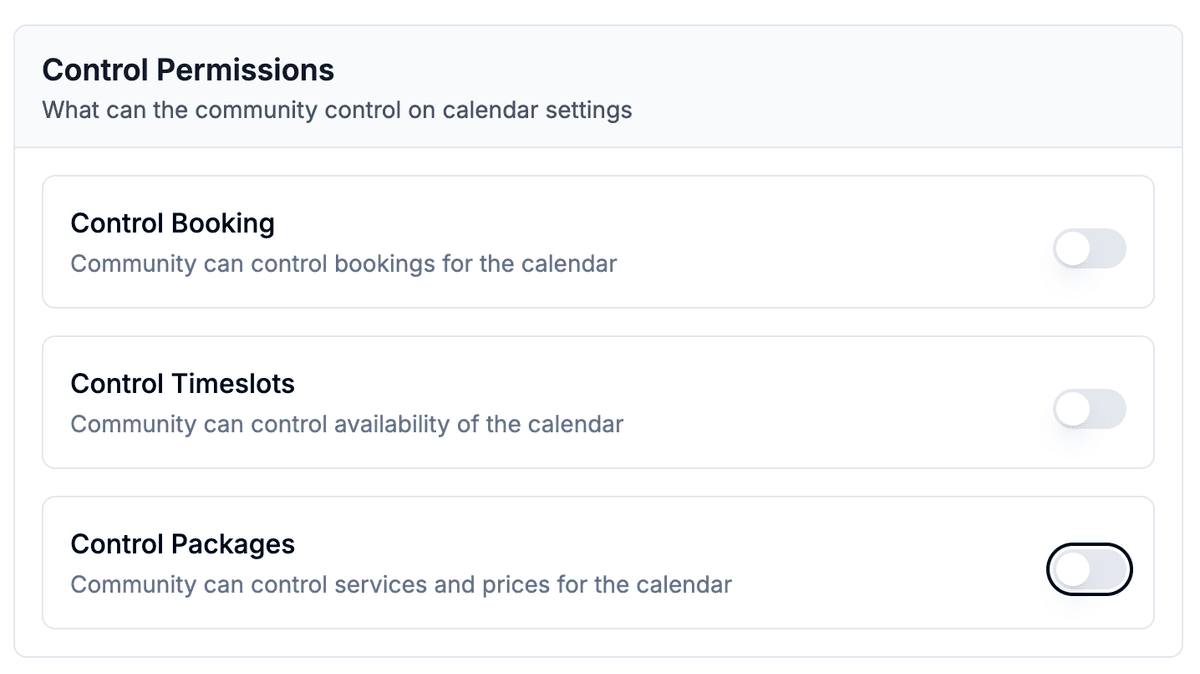
A venue community becomes more valuable when coaches can list their calendar alongside court hire — players find everything in one place, and coaches get a ready-made audience. But it only works if the boundaries between what the venue controls and what the coach controls are clearly defined. SKEQ's community governance settings make that separation explicit.
Ready to run a fuller court with less overhead?
Get your first venue community live for free — configure your slots, set your pricing, and share your booking link. The tools for priority coach access, cancellation tiers, and payment collection are there when your venue is ready for them. No credit card needed.